
Flatland, Edwin Abbott Abbott.
It is hard to write a novel, or even a novella, that puts maths front and centre. When I asked ChatGPT to suggest such works, other than the subject of this review, it returned a list of ten titles. I was already familiar with a number of the suggestions, but none had resonated with me as Flatland did, which I consider to be unique in a coherent and thoughtful way.
Layers of Meaning
Flatland: A Romance of Many Dimensions introduces the reader to a world of two-dimensional beings where shapes with more sides enjoy greater social status. The pinnacle of society is thus a circle, with polygons like hexagons, heptagons, and octagons occupying roles such as officers, judges, and other prominent positions. Women, in stark contrast, are reduced to simple line segments. Abbott’s geometric framework thus serves as a satire of Victorian society, reflecting rigid social hierarchies and gender inequalities. The narrator, A. Square, occupies a middling position in the social hierarchy (more precisely, the professional class, below the aristocracy of circles).

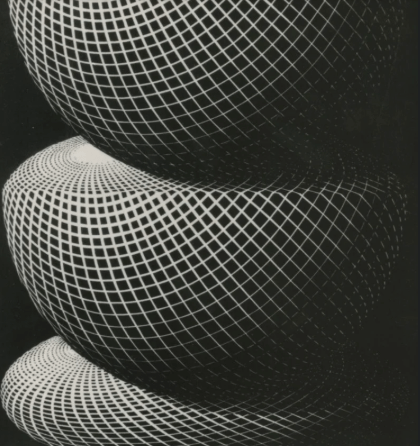
Besides describing the dynamics of this two-dimensional society—delivered in clever and coherent detail by Abbott—the main event occurs when A. Square is visited by a sphere from Spaceland, a three-dimensional world. Being introduced to higher dimensions forces A. Square to reassess his fundamental worldview, and his attempts to share this newfound perspective with others in Flatland are met with scorn. Abbott was thus also able to use his geometric framework to illustrate the human tendency to resist ideas that challenge conventional views.
Two points are particularly worth noting about Flatland:
Firstly, although Flatland appears to be a tokenistic exercise in geometry, its deeper significance lies in its social commentary. Many works of fiction focus primarily on their narratives without attempting to convey broader themes. In contrast, great literary works like Crime and Punishment wrestle with eternal debates about morality and justice, whilst Lord of the Flies explores the nature of civilisation and the darker aspects of human behaviour. While Flatland may not belong in the same category as these monumental works, Abbott nevertheless deserves significant credit for a novella that combines mathematical creativity with meaningful commentary.

For educators, Flatland is a niche resource that may not be suitable for use in the classroom in its entirety. While it could appeal to readers intrigued by novel mathematical ideas—particularly those with an interest in social history—its specificity probably does not justify the time required to read the full text. However, excerpts could be effectively integrated into cross-disciplinary lessons. Do readers of this post, who have also read Flatland, agree with this point?
Enduring Appeal
Though first published in 1884, Flatland retains its relevance. Its critique of society and commentary on how new ideas are received remain pertinent.
If you have read Flatland, I would be curious to hear your thoughts.
Another blog post, coming soon.
George Bowman
Founder, Maths Advance
 MATHS ADVANCE BLOG
Leave a comment